Half My Pre-Lit Tree Went Out. Here's What Actually Fixed It
If half your pre-lit tree goes out, work in this order: check the two tiny fuses hidden in the sliding door on the plug, then use a light repair tool to fix a failed shunt in the dark section, then hunt for a loose or burned-out bulb. The fuse takes two minutes and fixes it more often than anything else, so always start there.
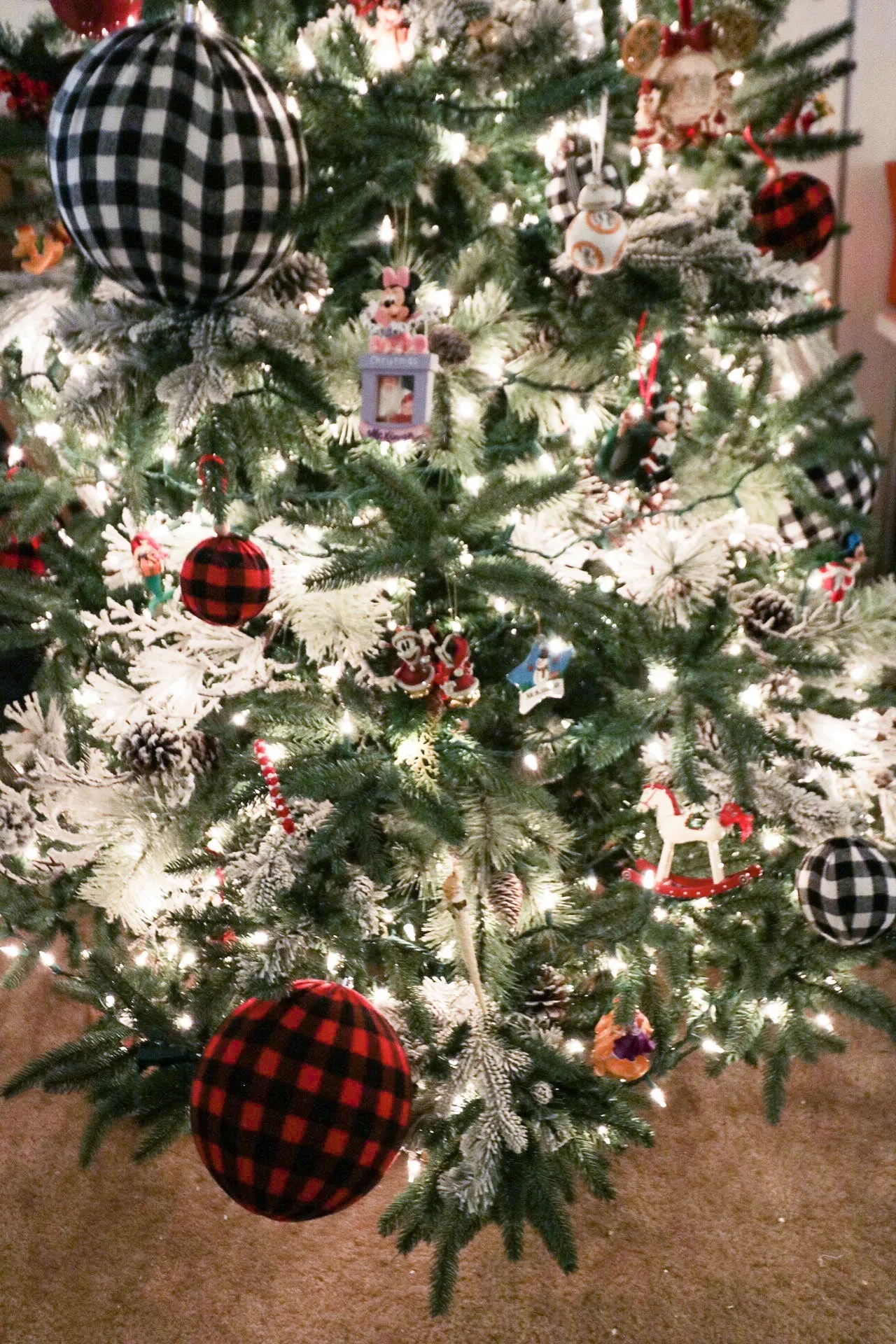
Picture me at 9pm on a Tuesday, sitting on the floor of my living room, staring at a Christmas tree that is beautifully lit from the top down to about the middle and then just… dark. Fluffed. Ribboned. Half the ornaments already on it. And dead from the waist down!
I’m not going to lie, I said some things. I genuinely told my husband I was going to drag the whole thing to the curb and buy a new one, which, for a tree this size, is a few hundred dollars I did not want to spend in December. He very calmly said “did you check the fuse?” and I said “what fuse,” and that is honestly where this whole post started.
Because here’s the thing nobody tells you: a pre-lit tree isn’t one long strand of lights. It’s a bunch of separate strands wired in sections, which is exactly why half a tree can go out while the other half sits there glowing like nothing happened. So the fix isn’t “find the one bad bulb in nine hundred bulbs” (which is what I assumed, and why I was ready to give up). The fix is to work through the sections in a specific order, cheapest and fastest first.
It took me two dark Decembers to figure out that order. I watched some truly unhelpful videos, I bought one tool that didn’t work on my tree at all, and I pulled about forty bulbs out one at a time before I learned that was the last step and not the first. So here’s the order I use now, every single time, and it has saved three trees and about six strands of porch lights.
1. The fuse in the plug (start here, always)
Look at the male plug on the end of your light strand, the part that goes in the wall. On the flat face there’s a tiny sliding door. You can usually open it with your thumbnail, but a small flathead screwdriver is easier. Behind it are two little glass fuses about the size of a grain of rice.
Slide them out into your palm and hold them up to a lamp. A good fuse has a thin wire running straight through the glass. A blown one has that wire broken in the middle, or the glass looks smoky and gray. Mine were both dark and I had genuinely never looked at that part of a plug in my entire life!
Replace them with the same amp rating printed on the plug (mine say 3A) and you’re done. Every pre-lit tree comes with two spare fuses taped in a tiny bag to the cord, and every single one of us has thrown that bag away, so I keep a 20-pack of 3A replacement string light fuses in my decor bin now. It’s a few dollars and it will outlive the tree!
Quick thing I learned the hard way: if the new fuse blows again the second you plug in, stop. That means something is actually shorting, usually too many strands run off one plug, and you don’t want to keep feeding it fuses!
2. The shunt (this is the one that fixed my tree)
If the fuse was fine, or you replaced it and half the tree is still dark, the culprit is almost always a shunt.
Okay, so, a shunt. Every mini bulb has a tiny wire wrapped around the base that’s supposed to kick in when the filament burns out and keep the current flowing to the rest of the section. That’s why one dead bulb usually doesn’t kill the strand. But when that little shunt fails to kick in, the circuit breaks and everything after it goes dark. One bulb takes out the whole section.
You will never find it by eye. I tried! The bad bulb looks exactly like every other bulb.
This is where the LightKeeper Pro repair tool earns its keep. You pull one bulb out of the dark section, put the tool in that empty socket, and squeeze the trigger a bunch of times. It sends a pulse down the strand that reconnects the failed shunt. Read the little booklet that comes with it, because the order of operations matters and I absolutely did it wrong the first time!
My tree lit back up on about the fifteenth squeeze. I sat there on the floor and actually yelled. My daughter came running in thinking something happened, and something had happened, my tree was back!
One important limit: the LightKeeper Pro only works on incandescent sets. If your tree is LED, that tool will do nothing for you and you want the LED Keeper instead, which works differently (it clips into the wiring to find the break). Even the LED version doesn’t work on every LED set, so check how your tree is wired before you order. I have a thirty dollar tool in my bin that has never once worked on my own tree, y’all!
3. The bulb itself
Still dark? Now, and only now, do you start pulling bulbs.
Go to the first unlit bulb right after the last lit one. That’s where the break is. Wiggle it, because half the time a bulb has just worked its way loose in the socket from being stuffed in a bag for eleven months. If wiggling doesn’t do it, pull it and swap in a known-good bulb.
Check the voltage before you buy replacements! This tripped me up: 50 and 100-light strings usually take 2.5V bulbs, while 35 and 70-light strings take 3.5V. It’s printed on the tag on the cord. I keep both, a bag of 2.5V clear mini bulbs and a bag of 3.5V clear mini bulbs with a white base, because I have trees and strands in both. If your tree has green wire, the 3.5V version with the green base disappears into the branches much better.
Also, look at the base color of the bulb you pulled and match it. A white base on a green wire tree is one of those things you don’t notice until you do, and then it’s all you see.
4. When you just wrap over it
Sometimes a section is genuinely gone. The wire is nicked somewhere inside the branch, or you’ve spent an hour and you’re out of patience (valid!).
I keep a couple of plain 100-count clear mini light strands on green wire in my storage bin for exactly this. You don’t remove the dead strand, you just leave it and wrap a new one over the dark section, following the same path the original took, in toward the trunk and back out. Nobody has ever noticed on mine!
The one rule: match the light color. Warm white next to cool white next to that slightly yellow older-strand white looks awful and it’s the only thing you’ll see in photos! Take a bulb from your tree to compare, or better, buy the spare strand the same year you buy the tree so the color still matches when you need it.
What I do now, before the tree goes up
Two minutes in October: plug the tree in on the floor, still in the box, before it goes into the stand and before a single ornament touches it. If a section is out I’d rather find out then than at 9pm with ribbon already tied on!
And keep the repair tool, a pack of fuses and a small bag of bulbs together in one ziploc in your tree storage bin. It’s maybe $30 total for all of it and it means the answer to “half my tree is out” is a ten minute annoyance instead of a new tree.
If this saves your tree from the curb, please come tell me on instagram and tag me @sugardesignco, I want to see it lit back up!
-Ciera
Made something with this? Tag me @sugardesignco — I love seeing them.
Questions I get asked
- Why did half my pre-lit tree go out at once?
- Because a pre-lit tree isn't one strand, it's several strands wired in sections. When a whole section goes dark, something broke the circuit for that section only, usually a blown fuse, a failed shunt inside one bulb, or a bulb that worked its way loose in the socket.
- Where is the fuse on a pre-lit Christmas tree?
- In the male plug itself. There's a tiny sliding door on the flat face of the plug, and behind it sit two little glass fuses. Slide it open with your thumbnail or a flathead screwdriver and they'll fall right into your hand.
- Does the LightKeeper Pro work on LED pre-lit trees?
- No. The LightKeeper Pro is for incandescent sets only. If your tree is LED you need the LED Keeper instead, and even that one doesn't work on every LED set, so check your tree's wiring before you buy.
- Is it worth fixing a pre-lit tree or should I just replace it?
- Fix it first. A repair tool, a bag of bulbs and a pack of fuses run well under $40 together and they'll keep working on every strand you own for years. A new tree in the same size is usually a few hundred dollars.